Melissa Evans
Content Writer
Remote teams don’t lose culture – they just lose the happy accidents that used to create it. No hallway chats. No shared lunches. No overhearing someone say, “Wow, Jan aced that report!" What’s left can quickly become calendars and deadlines. If you want your remote team to feel connected, motivated and genuinely part of something (not just logged in), here are seven ways to build culture on purpose – and actually make it stick.
By Melissa Evans
February 10, 2026

Remote work has changed where we work – but it hasn’t changed the non-negotiable trifecta of needs that people need to thrive. Connection, recognition and belonging still matter just as much when teams are distributed across cities, time zones or continents. The challenge isn’t that culture disappears in remote teams – it’s that it no longer forms by accident. Without hallway chats or shared lunches, culture has to be built intentionally.
Remote work has unlocked flexibility, autonomy and access to global talent – but it’s also quietly eroded something many teams once took for granted: culture by proximity. But don’t panic – this isn’t actually a bad thing. It simply reveals the foundational flaws in companies that made no intentional effort to build culture – the fact that you’re here, reading this, means that won’t be your team.
In offices, culture traditionally formed through shared spaces, casual conversations and small, everyday moments. In remote teams, those signals disappear unless they’re intentionally replaced. What’s left, too often, is a calendar full of meetings and a growing sense of distance.
Studies from Gallup have found that employees who feel connected to their team and organisation are significantly more engaged, more resilient and far less likely to leave. Yet remote workers are more likely to report feelings of isolation and disengagement – not because they care less, but because the cues that signal belonging are easier to miss when everyone is behind a screen.
The good news? Strong remote culture isn’t about recreating the office online or forcing connection through awkward activities. It’s about being intentional with the moments that matter – how people are welcomed, recognized, celebrated and included. Small, repeatable actions have an outsized impact when distance is involved.
This guide is designed to help teams avoid the most common remote culture pitfalls –invisibility, disconnection and inconsistency (basically, the evil twin trifecta). Instead, we’ll show you how to make your team feel seen, valued and part of something big, no matter where they’re working from.
Here are seven proven ways to build strong, human culture in remote teams – without forcing fun or overloading calendars. Remember, it’s not about doing more things, it’s about doing the right things.
In an office, recognition has an audience. In remote teams, it often disappears into private messages. But it doesn’t have to be this way.
Research from Gallup shows that employees who receive regular recognition are significantly more engaged and productive – but how that recognition is delivered matters. Public, shared recognition reinforces social belonging by showing that appreciation isn’t isolated or hierarchical; it’s cultural.
This is where group recognition shines. A “Wins” or “Good Vibes” Slack channel where anyone can share a win or give a shoutout or a group card from the team turns appreciation into a collective act, not a manager-only responsibility.
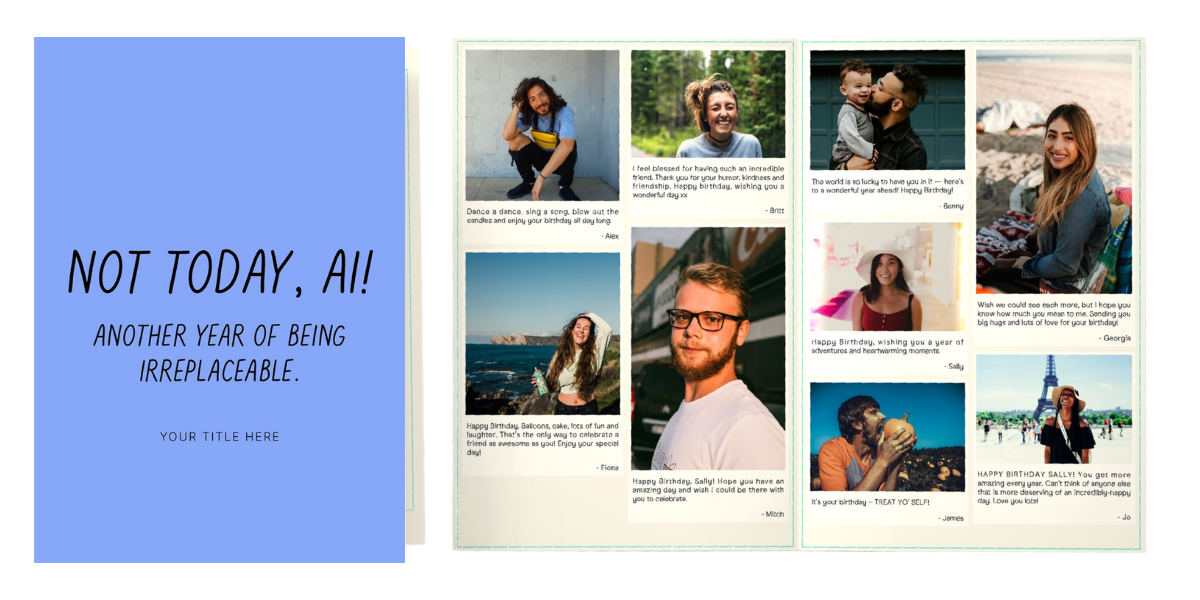
When people see multiple colleagues take a moment to contribute – each in their own voice – it creates social proof that effort is noticed and valued across the team. It’s not louder praise; it’s wider praise. And in remote teams, width matters more than volume.
Remote teams don’t lack time together – they lack unstructured time together. Research on distributed work shows that connection is built less through formal meetings and more through shared moments that feel voluntary and human. Without intentional design, remote teams default to efficiency-only interactions, which slowly erode trust.
The best part? Shared moments don’t need to be elaborate. A team-wide celebration for a milestone, a virtual coffee with no agenda or a group send-off for a teammate creates emotional memory – the kind that binds teams over time. The goal isn’t forced fun, it’s shared presence. One meaningful moment beats ten awkward icebreakers (for the love of humanity, please stop asking your team what vegetable they would be!).
One of the fastest ways to drain culture from a remote team is to treat everyone the same.
Research in organisational psychology consistently shows that personal recognition is more motivating than generic rewards. People don’t need grand gestures – they need signals that they’ve been noticed as individuals, especially in a world that treats everyone as replaceable.
The solution? We’ve got two words for you Kimmy: care and culture. Ask new hires or existing team members about their interests and celebrate milestones in ways that reflect the person, not just the policy. Whether it’s an eGift Card aligned to their passion for coffee or books or a message that references something specific to them, personalisation communicates care. And care, in remote teams, is culture.

Remote doesn’t have to mean never together. Research on hybrid and distributed teams shows that occasional in-person time can significantly strengthen trust and collaboration – not because work can’t happen remotely, but because humans bond faster when they share physical space. Even infrequent meetups help reinforce relationships that then carry back into day-to-day remote work.
The key is intention, not frequency. A team lunch, an offsite work session or a casual half-day together gives people space to connect beyond screens – to read body language, have unplanned conversations and build rapport that’s hard to replicate online. These moments don’t need packed agendas – in fact, the most effective meetups leave room for informal interaction alongside focused work.
For distributed teams, this might mean organizing meetups when travel overlaps, during conferences or when a critical mass of the team is in the same city. When that’s possible, acknowledging the moment – perhaps with a shared meal, a small celebration or a group experience – reinforces that coming together matters.
In-person meetups work best when they complement remote culture, not replace it. They act as cultural anchors: reminders that behind every Slack message and Zoom square is a real person, part of the same team. When used thoughtfully, these moments deepen connection without undermining the flexibility that makes remote work so powerful.
Remote onboarding is where culture is either established – or lost. Studies show that employees form lasting perceptions about their workplace within the first one to two months. In remote settings, those impressions are shaped less by office environment and more by social signals. Are they welcomed? Are they acknowledged? Do people reach out?
A thoughtful welcome – think a group card signed by the team or a small welcome gift – helps replace the informal reassurance that offices provide naturally. It reduces anxiety, accelerates trust and signals that connection is intentional here.
But it’s not just about doing the right things – it’s about doing them at the right time. The earliest signals matter most. Organisational psychology tells us that these early experiences set expectations around trust, recognition and inclusion. When remote teams fail to establish those signals early and consistently, culture doesn’t disappear – it just gets replaced by assumptions and transactional ways of working.
So, our advice? Get those welcome cards in action before they’ve even had their first day!
Remote work can unintentionally narrow people down to tasks and deliverables. Yet research on psychological safety shows that teams perform better when individuals feel recognized as whole humans, not just contributors. Celebrating life moments – birthdays, milestones, personal achievements – builds empathy and trust, which remote teams rely on more heavily than their in-office counterparts.
Group celebrations matter here. When teams come together to acknowledge someone’s life moment, it reinforces collective care and shared identity. Culture strengthens when people feel supported not just in what they do, but in who they are.
Need a little more inspiration? With Employee Appreciation Day fast approaching, you’ll want to try these creative ways to celebrate with your remote or hybrid team.
The strongest cultures are easy to participate in. Many remote teams fail at culture-building not because they don’t care – but because participation often requires too many steps, too many tools, too much time.
Research on inclusion shows that lowering barriers dramatically increases engagement. Simple links, easy logins, quick ways to contribute – these details matter. When it’s easy to join a slack channel, sign a card or participate in a coffee catch up, more voices are included. And inclusion, not perfection, is what sustains remote culture at scale.

Remote culture isn’t built through perks or policies – it’s built through repeated signals of care, inclusion and appreciation. When teams consistently make space for human connection, distance becomes secondary.
With the right rituals and tools in place, remote teams create their own traditions – and they’re no less significant than in-office traditions.

Melissa Evans
Content Writer

Ali + Julie
Co-Founders, GroupTogether.
Life’s busy. That’s why we’re here to make it easy for you to collect money from a group. Less wasted time, less packaging waste, and spending a little less but giving a lot better!